Description/Notes:
all of these mixed in the sensitizer with the initial emulsion
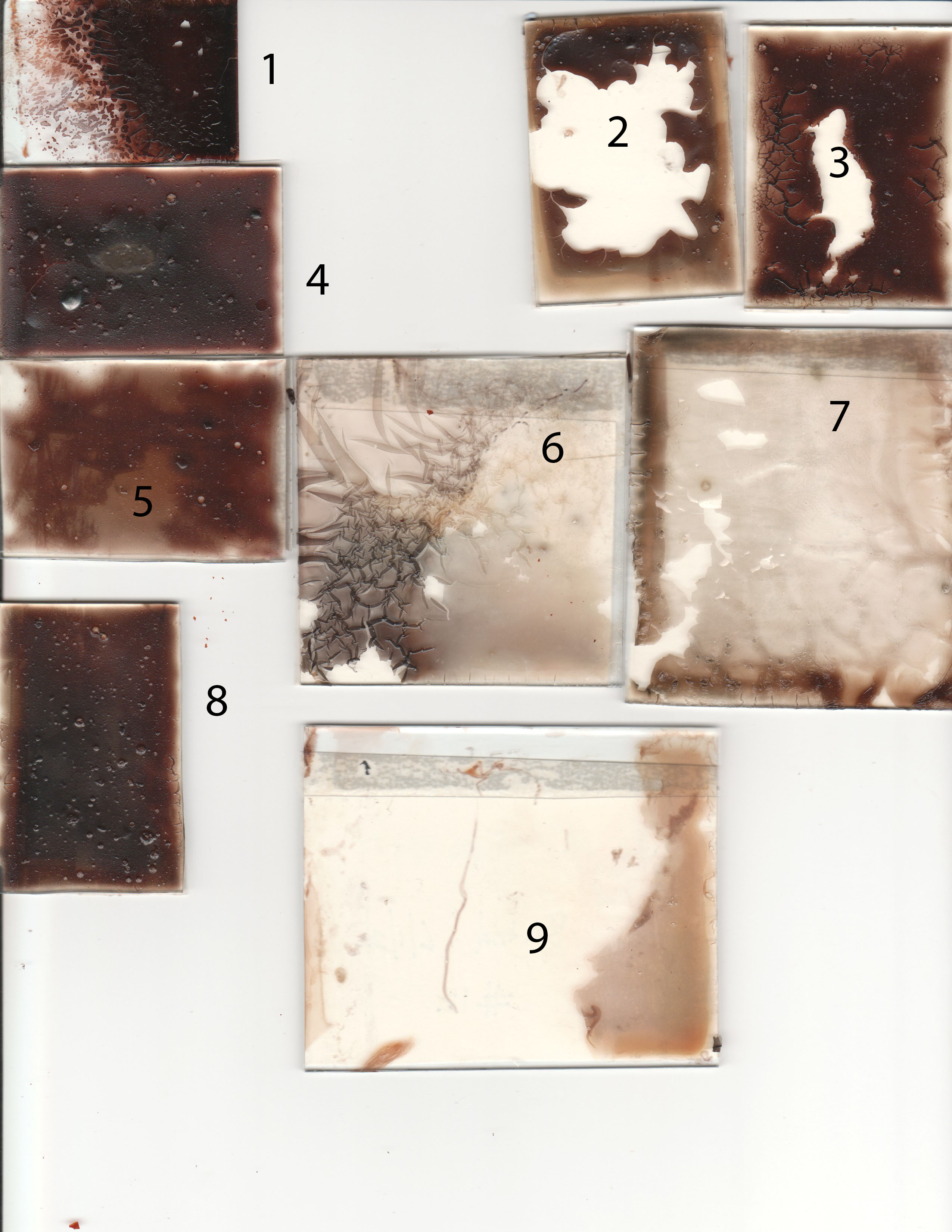
- AR + Gelatin — GlassPrint interesting splitting of the emulsion here, see note below. is cracking with age
- AR + Gelatin — GlassPrint ‘thin poured thick’ whatever that means…
- AR + Gelatin — GlassPrint ‘thin’ pour. put paper on middle of it before it was dry which is why some emulsion is missing, didnt crack with age
- AR + Gelatin — GlassPrint ‘thick’ pour. cracking with age
- AR + Gelatin — GlassPrint ‘thin’ pour?. doesnt seem cracked (6-22-2023)
- Pure AR — GlassPrint ‘thin’ detaching with time sadly
- Pure AR — GlassPrint ‘thin’ detaching with time sadly
- AR + Gelatin — GlassPrint ‘thick’ pour. cracking with age
- Pure AR — GlassPrint Transfer Test. not sure where other half ended up
lots of detachment here
Notes from 6-1-21:
- Thick Pours lead to cracking AR
- Heat Drying leads to Cracking AR
- Thin AR mediums detach from glass in water
- glass prints dont show latent image as much as paper before development
- Gelatin + Arrowroot Emulsion V0 split after a day leading to separation on the plate even after mixing, this created textures and moves silver concentrations moving around. (see #1 below)
- Aside from obvious graniness, there appears to be a tiny grain size still present. may be due to AR+gelatin separation.
- While AR surface quality is nice, need to find a way to maintain solution otherwise theres no point
CONTEX: (the goal of these investigations was to find an alternative to a pure gelatin emulsion because it needed to be heated in order to turn liquid)
Pure AR prints do have the same detached_emulsion issues. see edges of #4
Issues to address
Image